How to Choose a Reliable CCTV Supplier in 2026: Complete Guide for Importers & Distributors

How to Choose a Reliable CCTV Supplier | 10 Key Factors for Importers

Learn how to choose a reliable CCTV supplier for your business. Compare manufacturers vs trading companies, OEM services, quality control, pricing, certifications, and global supply chain support.

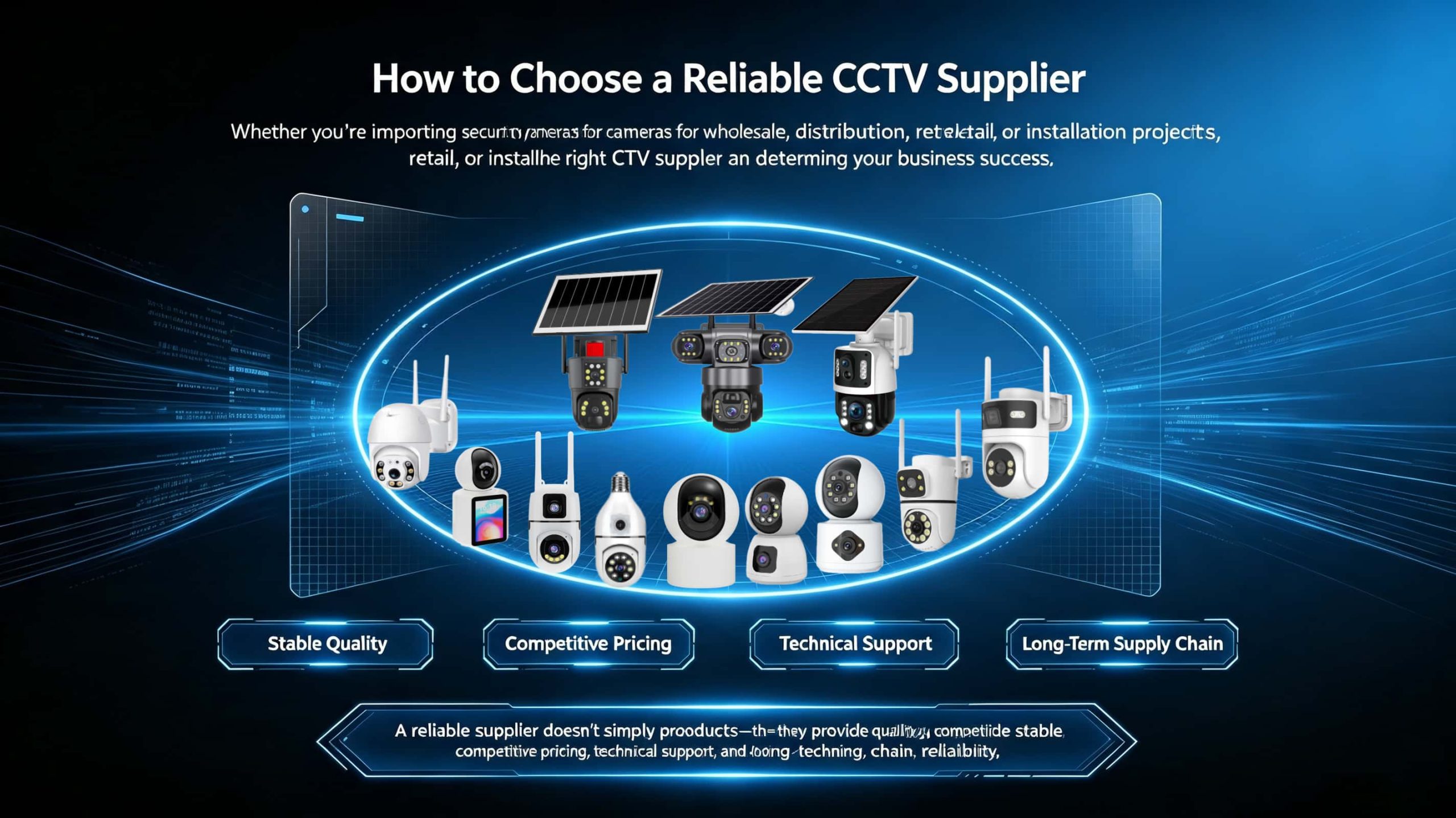
How to Choose a Reliable CCTV Supplier

Whether you’re importing security cameras for wholesale, distribution, retail, or installation projects, choosing the right CCTV supplier can determine your business success.

A reliable supplier doesn’t simply provide products—they provide stable quality, competitive pricing, technical support, and long-term supply chain reliability.

In this guide, we’ll explain the most important factors buyers should evaluate before selecting a CCTV supplier.

Why Choosing the Right CCTV Supplier Matters

The CCTV industry has become increasingly competitive.

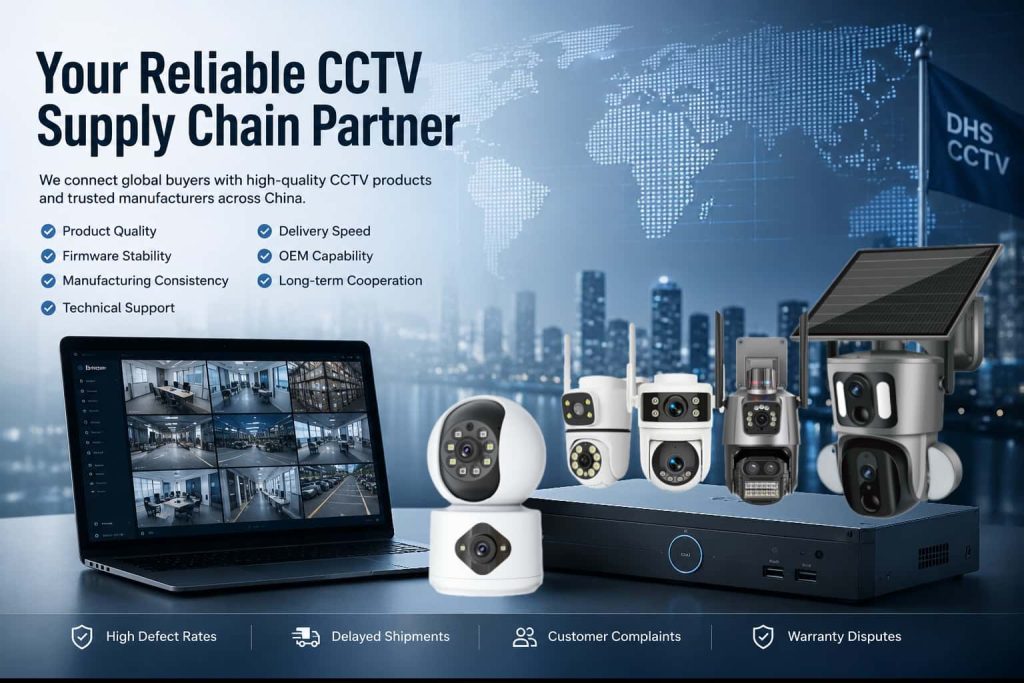
Many suppliers offer similar-looking cameras, but significant differences exist in:

  • Product quality
  • Firmware stability
  • Manufacturing consistency
  • Technical support
  • Delivery speed
  • OEM capability
  • Long-term cooperation

Choosing the wrong supplier often results in:

  • High defect rates
  • Delayed shipments
  • Customer complaints
  • Warranty disputes
  • Lost business opportunities

A professional supplier minimizes these risks and helps you build a stronger business.

1. Understand Whether You Need a Manufacturer or a Trading Company

Many buyers automatically assume factories are always the best option.In reality, that depends on your purchasing needs.

ManufacturerProfessional Trading Company
Produces specific product linesIntegrates products from multiple factories
Better for very large ordersBetter product variety
Limited product categoriesWider CCTV product selection
May have higher MOQUsually flexible MOQ
Less flexibilityMore flexible sourcing


2. Evaluate Product Range

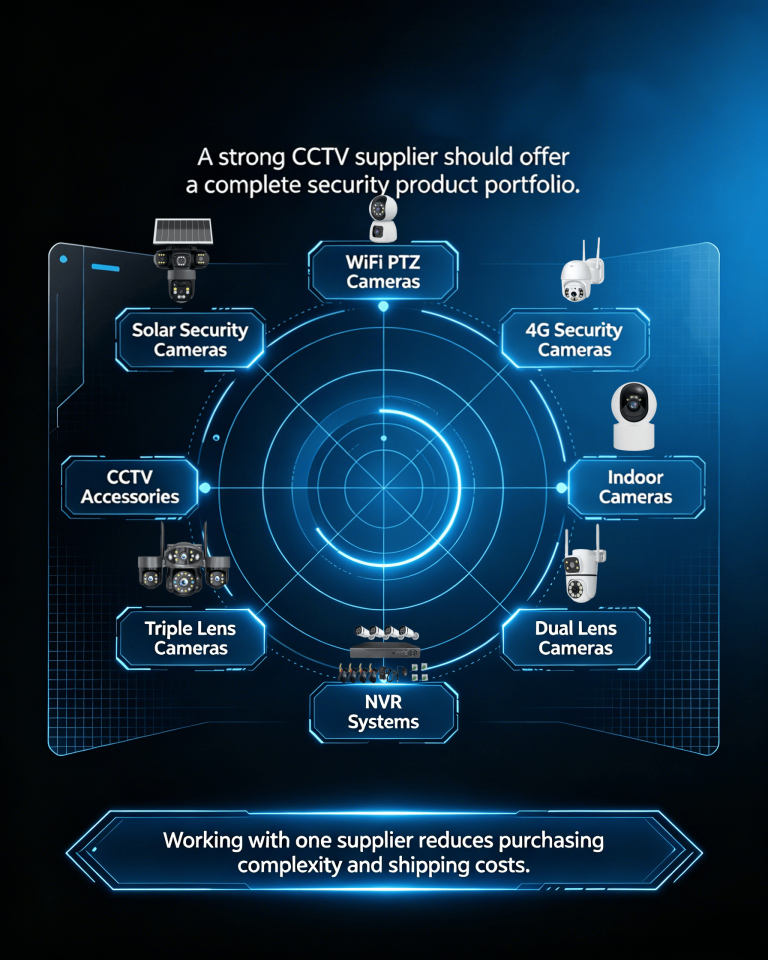
  • A strong CCTV supplier should offer a complete security product portfolio.

For example:

  • Solar Security Cameras
  • WiFi PTZ Cameras
  • 4G Security Cameras
  • Indoor Cameras
  • Dual Lens Cameras
  • Triple Lens Cameras
  • NVR Systems
  • IP Cameras
  • CCTV Accessories

Working with one supplier reduces purchasing complexity and shipping costs.

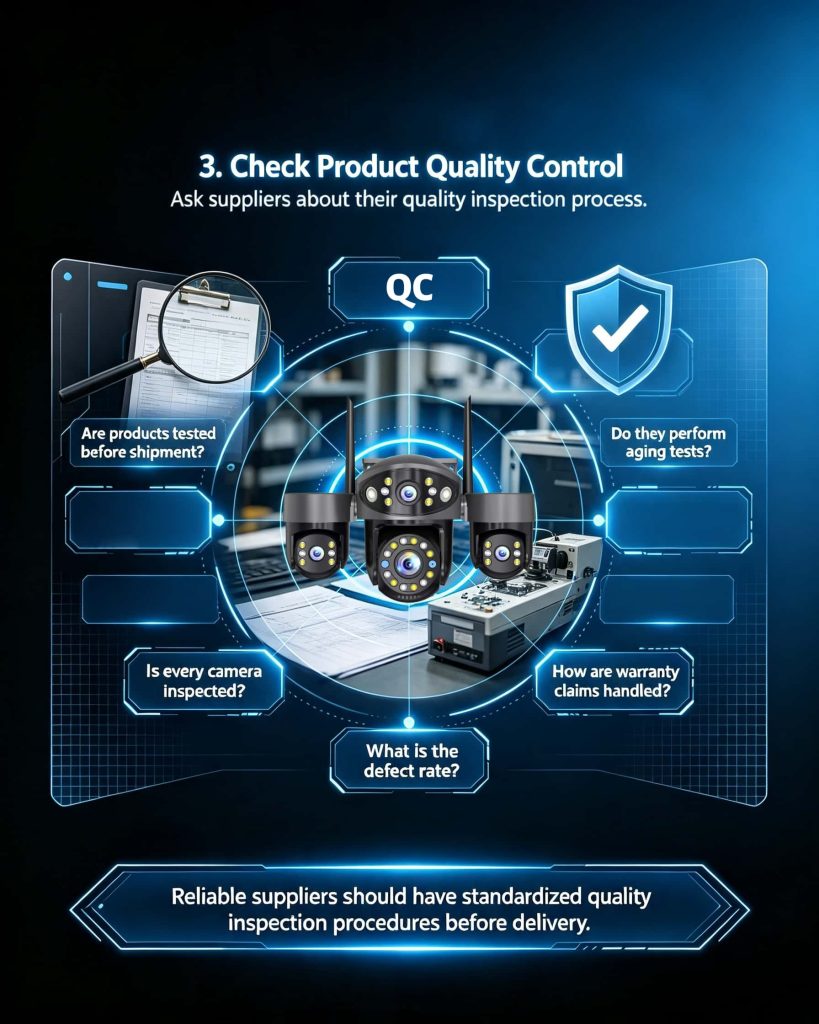
3. Check Product Quality Control

Ask suppliers about their quality inspection process.

Questions include:

  • Are products tested before shipment?
  • Do they perform aging tests?
  • Is every camera inspected?
  • What is the defect rate?
  • How are warranty claims handled?

Reliable suppliers should have standardized quality inspection procedures before delivery.

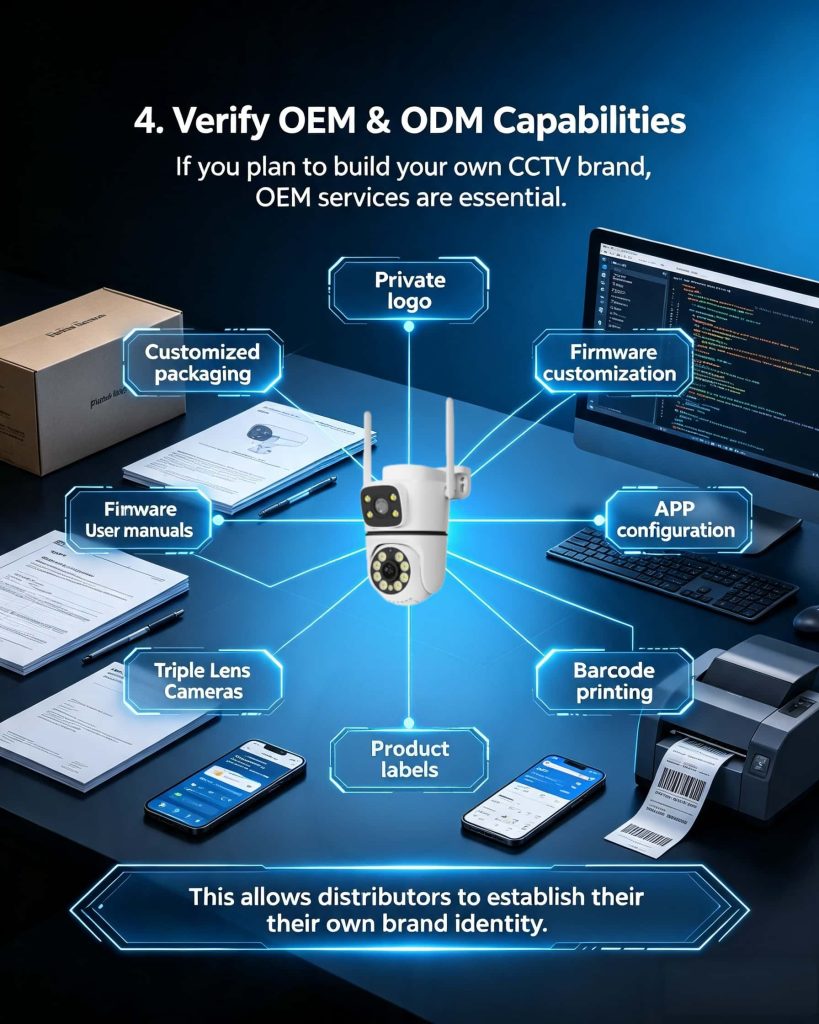
4. Verify OEM & ODM Capabilities

If you plan to build your own CCTV brand, OEM services are essential.

Typical OEM services include:

  • Private logo
  • Customized packaging
  • User manuals
  • Firmware customization
  • APP configuration
  • Product labels
  • Barcode printing

This allows distributors to establish their own brand identity.

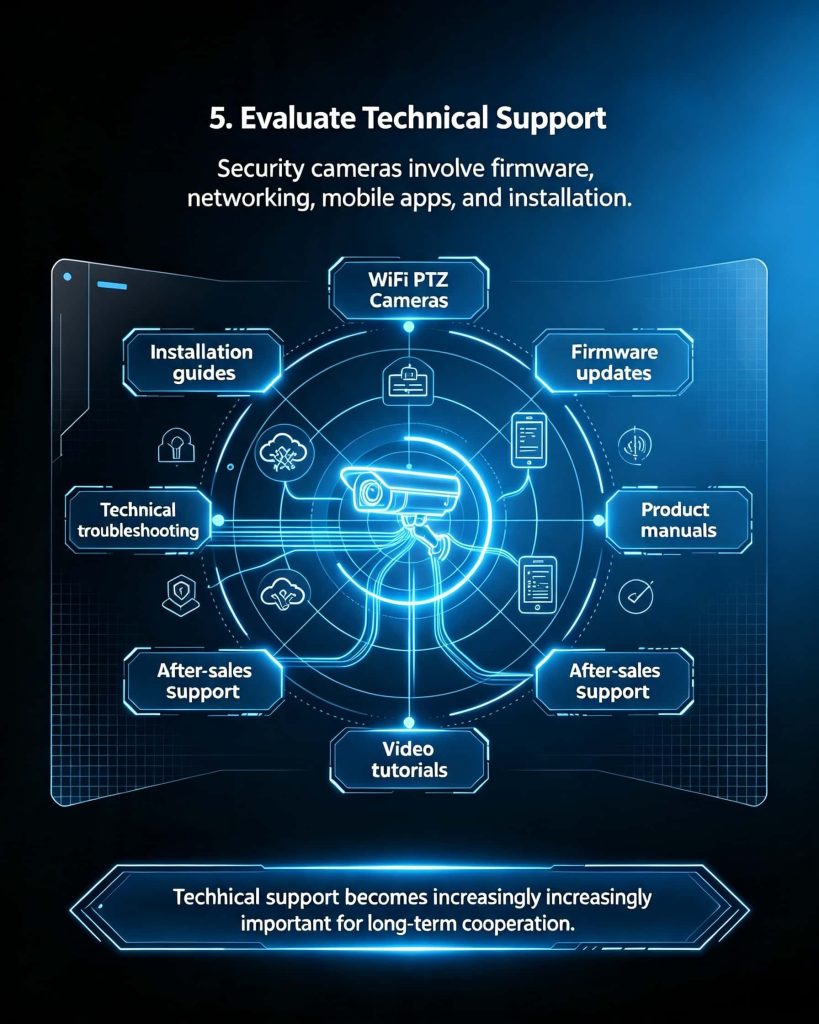
5. Evaluate Technical Support

Security cameras involve firmware, networking, mobile apps, and installation.

Ask whether the supplier provides:

  • Installation guides
  • Firmware updates
  • Technical troubleshooting
  • Product manuals
  • After-sales support
  • Video tutorials

Technical support becomes increasingly important for long-term cooperation.

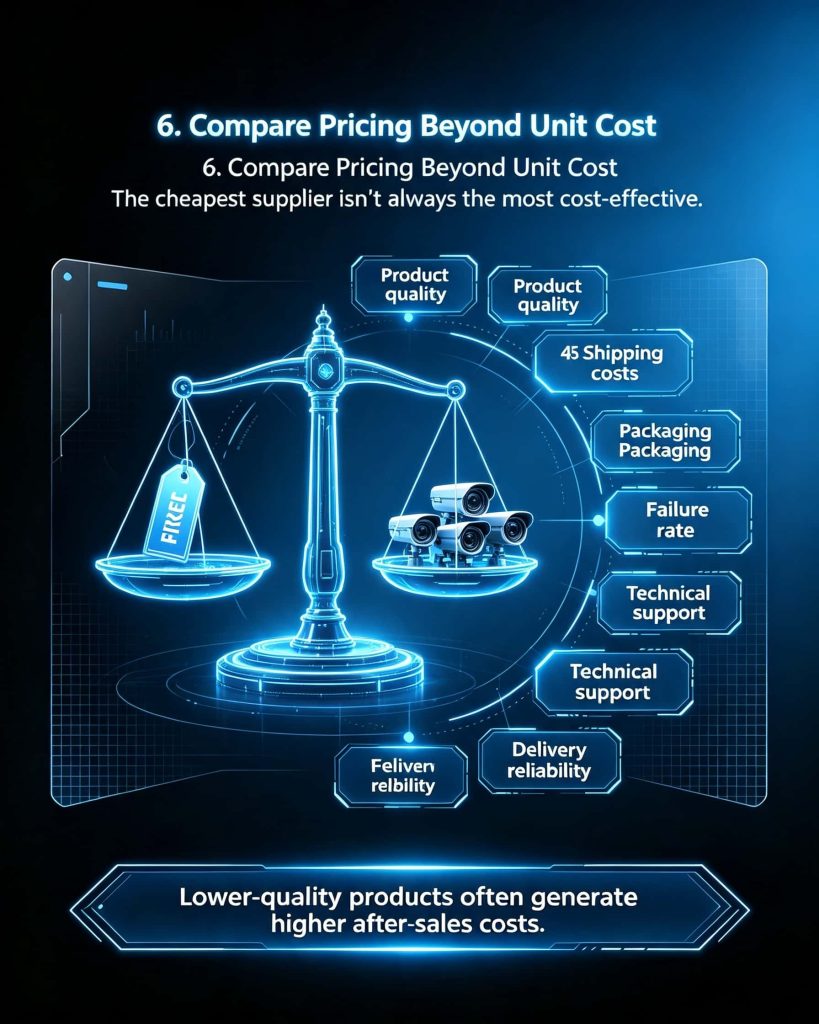
6. Compare Pricing Beyond Unit Cost

The cheapest supplier isn’t always the most cost-effective.

Instead, evaluate:

  • Product quality
  • Warranty
  • Shipping costs
  • Packaging
  • Failure rate
  • Technical support
  • Delivery reliability

Lower-quality products often generate higher after-sales costs.

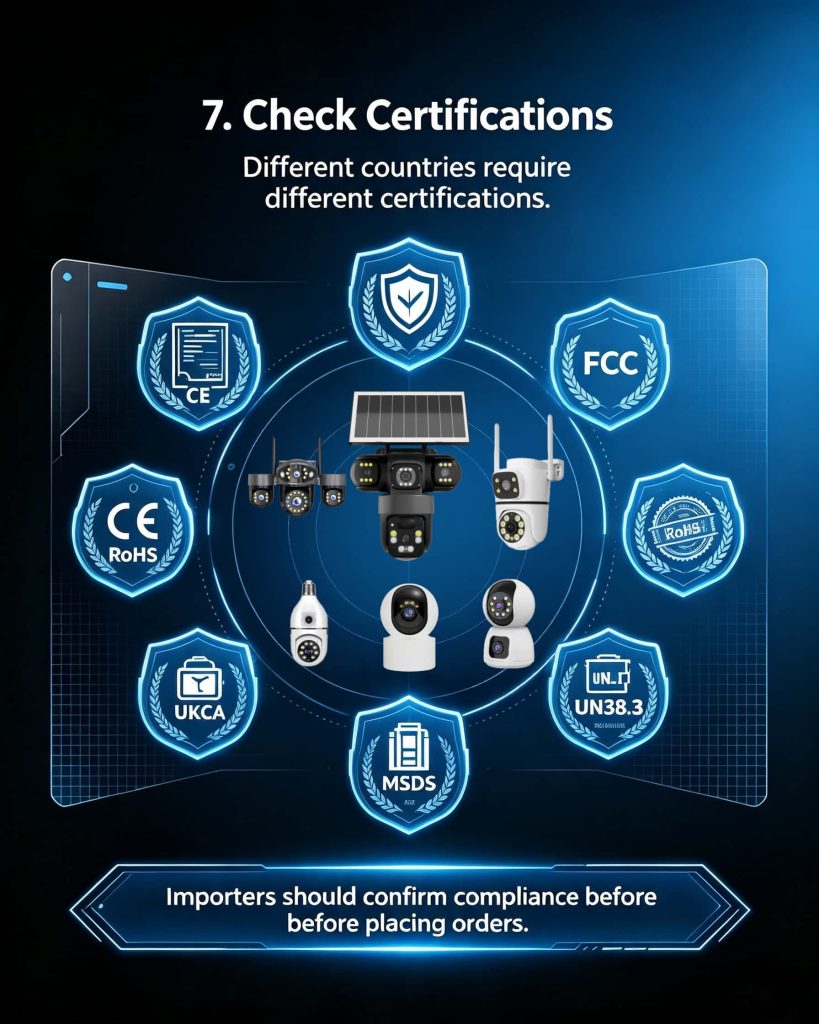
7. Check Certifications

Different countries require different certifications.

Common certifications include:

  • CE
  • FCC
  • RoHS
  • UKCA
  • MSDS (Battery products)
  • UN38.3 (Lithium batteries)

Importers should confirm compliance before placing orders.

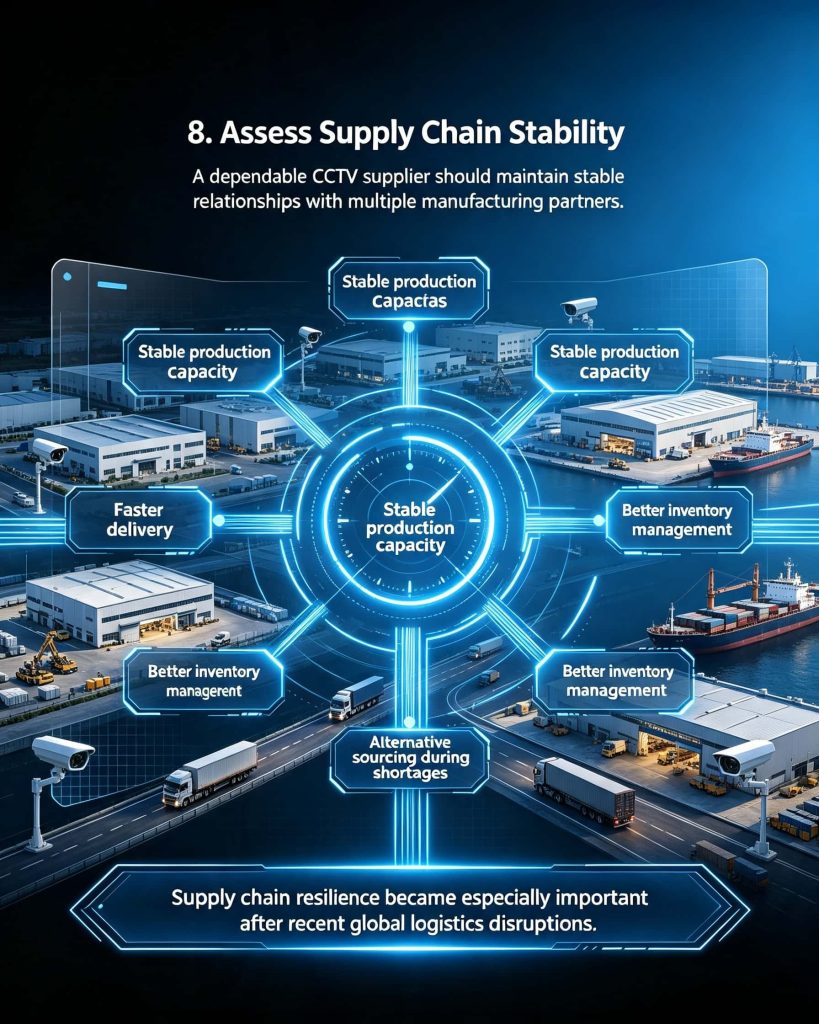
8. Assess Supply Chain Stability

A dependable CCTV supplier should maintain stable relationships with multiple manufacturing partners.

This helps ensure:

  • Stable production capacity
  • Faster delivery
  • Better inventory management
  • Alternative sourcing during shortages

Supply chain resilience became especially important after recent global logistics disruptions.

Importers should confirm compliance before placing orders.

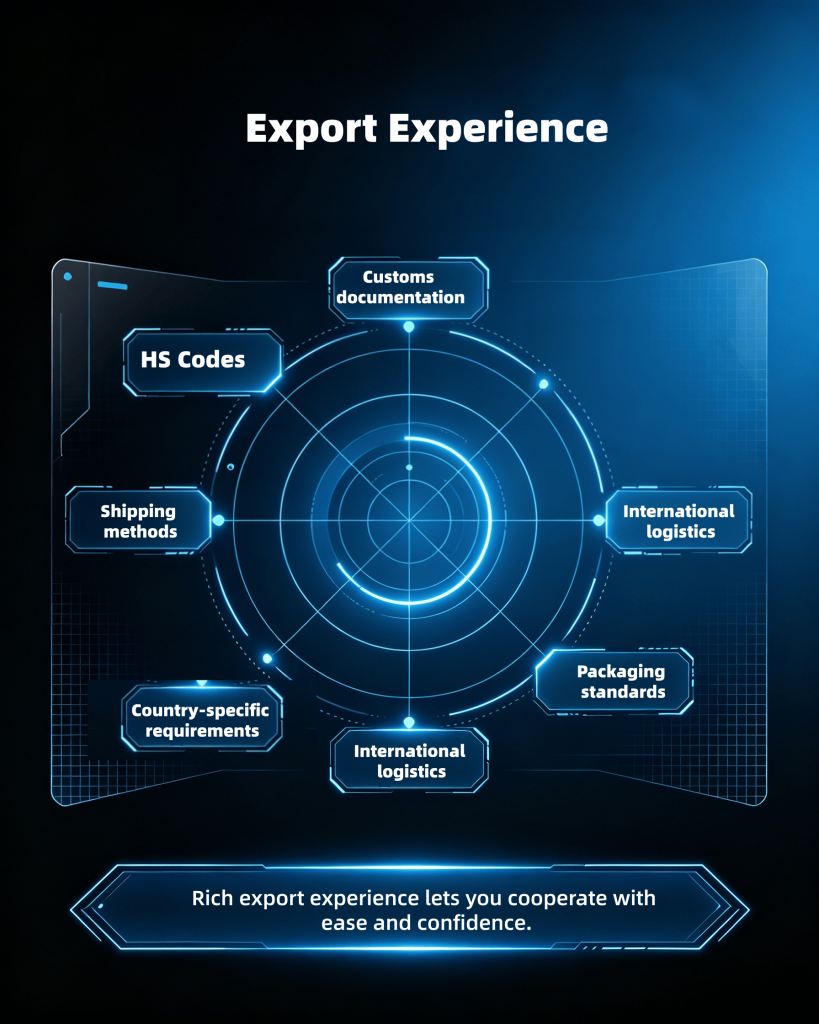
9. Review Export Experience

Experienced exporters understand:

  • Customs documentation
  • International logistics
  • Packaging standards
  • HS Codes
  • Shipping methods
  • Country-specific requirements

This reduces import risks and shipping delays.

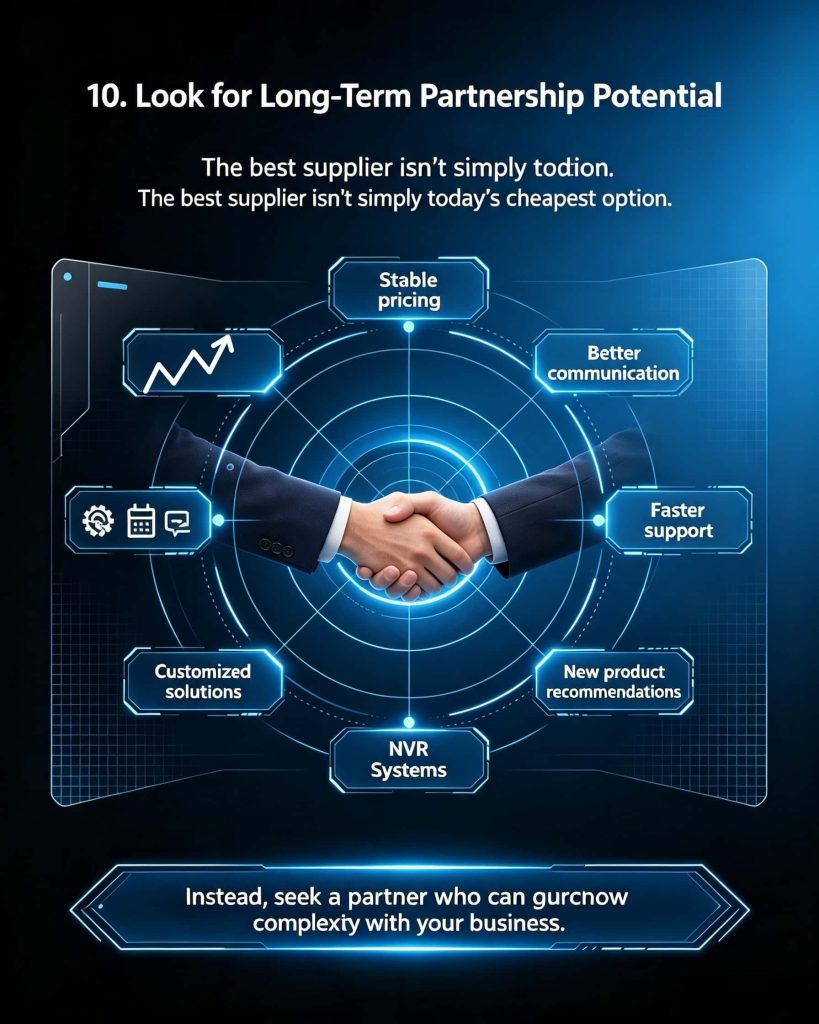
10. Look for Long-Term Partnership Potential

The best supplier isn’t simply today’s cheapest option.

Instead, seek a partner who can grow with your business.

A long-term supplier relationship offers:

  • Stable pricing
  • Better communication
  • Faster support
  • Customized solutions
  • New product recommendations
FAQ

Is it better to buy CCTV cameras directly from a factory?

Not always.

Factories work well for high-volume purchases of a single product category. If you require multiple camera types, flexible MOQ, or consolidated sourcing, an experienced trading company may provide greater efficiency and convenience.

How do I know if a CCTV supplier is reliable?

Evaluate:

  • Export experience
  • Quality inspection
  • Customer support
  • OEM capability
  • Certifications
  • Delivery performance
  • Communication responsiveness

Request product samples before placing large orders.

Most markets commonly require CE, FCC, and RoHS certifications. Battery-powered products may also require UN38.3 and MSDS documentation. Always verify your destination country’s import requirements before purchasing.

OEM allows you to customize branding, such as logos and packaging, while ODM involves customizing the product design or specifications in addition to branding.

Price should be only one factor. Product quality, technical support, warranty, and delivery reliability often have a greater impact on your long-term business costs.

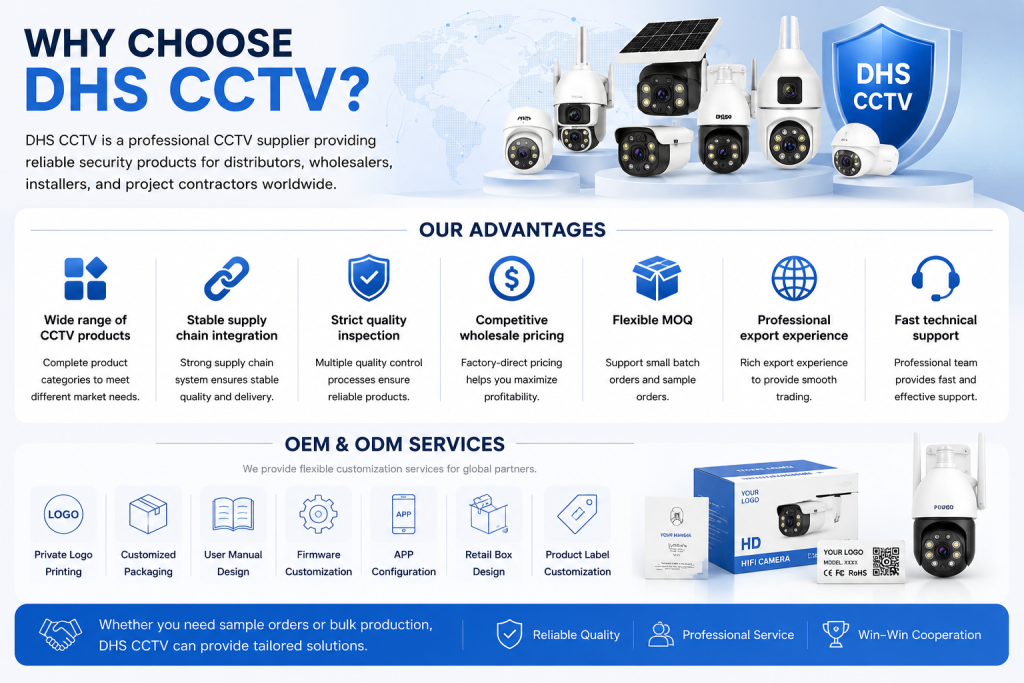
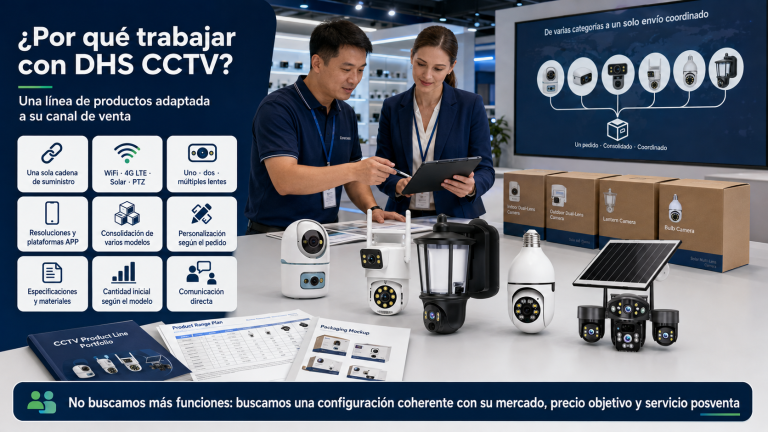
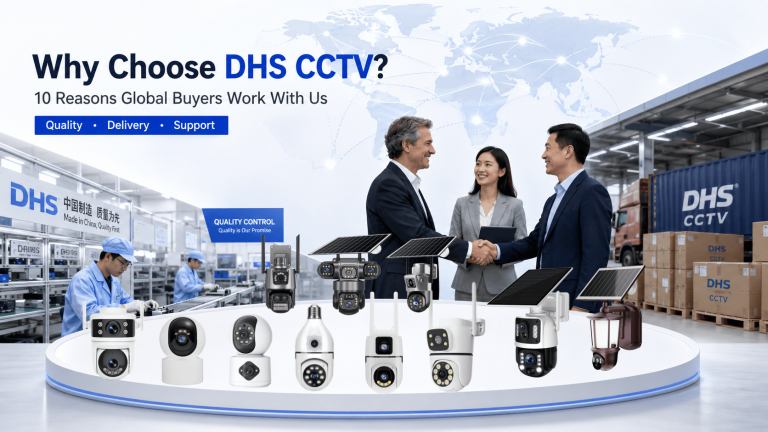
At DHS CCTV, we are not limited to a single factory. As a professional CCTV supply chain integrator, we help distributors, wholesalers, installers, and security brands source reliable surveillance products through a carefully selected network of manufacturing partners.

Our advantages include:

  • Wide selection of CCTV products
  • Stable supply chain integration
  • Strict quality inspection
  • Competitive wholesale pricing
  • Flexible MOQ
  • OEM & ODM services
  • Fast technical support
  • Professional export experience

Whether you’re launching a new security brand or expanding your existing product portfolio, we can help you source dependable CCTV solutions tailored to your market.

Choosing the right CCTV supplier is about much more than finding the lowest price. Product quality, supply chain reliability, technical support, export experience, and long-term cooperation all contribute to sustainable business success.

By evaluating suppliers across these key factors, importers and distributors can reduce risk, improve customer satisfaction, and build stronger partnerships that support long-term growth.

Ready to find a reliable CCTV supplier for your market? Browse our CCTV product range or contact our team to discuss your sourcing requirements.